Daylight Saving Time 2025: What You Need to Know
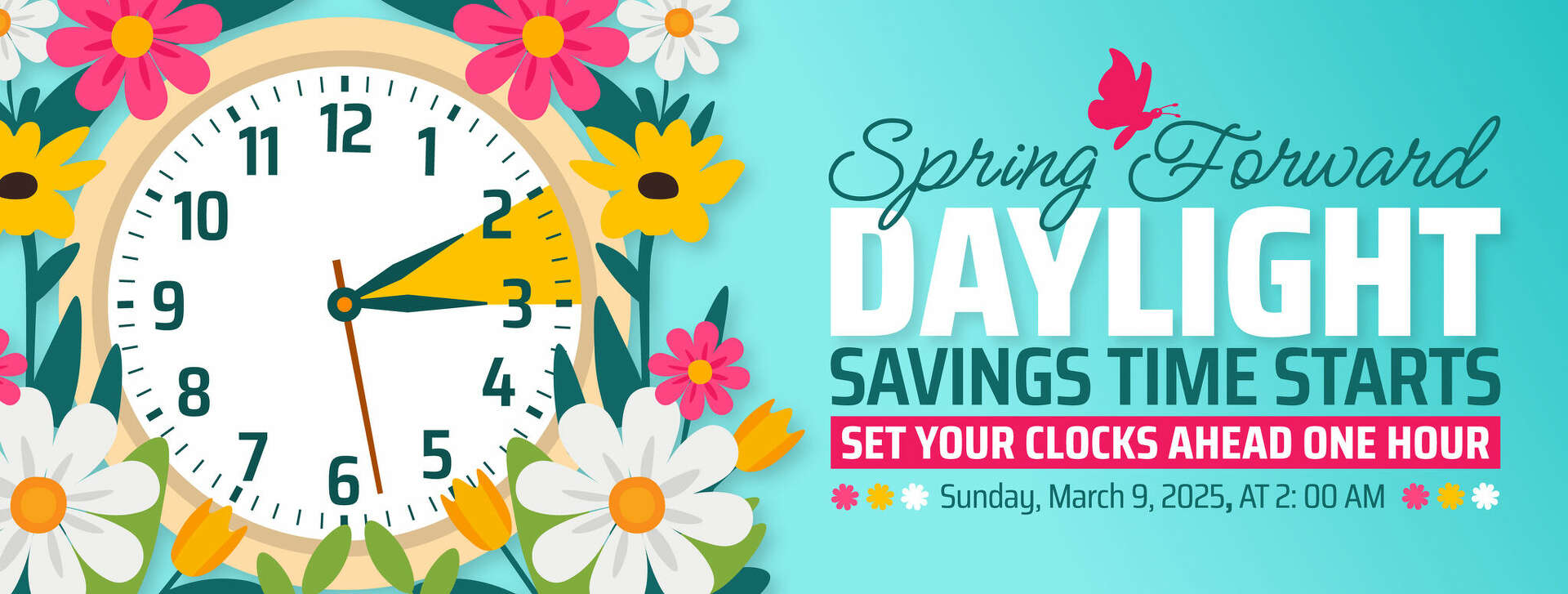
As the days get longer and warmer, it’s time to once again adjust our clocks. Daylight Saving Time (DST) for 2025 will begin on Sunday, March 9, when clocks are set forward one hour at 2:00 a.m. local standard time. This shift means more daylight in the evenings, offering extended outdoor hours for both recreation and work.
A Quick History of Daylight Saving Time
Daylight Saving Time has been a part of life in many countries for over a century. The practice was first implemented during World War I and later expanded to other conflicts with the goal of conserving energy. Over time, the U.S. officially adopted it, beginning in 1918, and the system has undergone several changes. The most recent adjustment came in 2007, when the U.S. extended the duration of DST, beginning the second Sunday in March and ending the first Sunday in November.
While the idea behind DST is to make better use of daylight, there has been an ongoing debate about its effectiveness and necessity, particularly in the modern era with the rise of artificial lighting and changes in energy usage patterns.
Health Impacts: More Daylight, More Risk?
While many look forward to the extra sunlight in the evenings, the shift can cause some challenges, particularly in the days following the time change. For most people, the change can result in “social jetlag,” a temporary disruption of the body’s internal clock. Experts note that this shift could have short-term effects on sleep, mood, and even productivity.
Studies have shown that the days following the time change are often associated with an increase in heart attacks, strokes, and traffic accidents. However, the effects tend to be short-lived, with individuals adjusting to the new schedule after a week or so.
The Ongoing Debate: To Save or Not to Save?
The debate about the effectiveness of Daylight Saving Time continues to rage, with arguments both for and against the practice. Proponents argue that DST leads to energy savings, better opportunities for outdoor activity, and a potential reduction in crime rates as more people are out and about during daylight hours.
Critics, on the other hand, point to the disruption to sleep patterns, the potential increase in health risks, and the fact that energy savings are minimal in today’s modern world. As a result, several U.S. states and countries worldwide have been debating whether to abolish DST entirely or keep it as is.
Notably, Arizona and Hawaii have already opted out of the time change in the U.S., choosing to stay on standard time year-round. In Europe, the European Union had proposed eliminating DST, but a final decision on the matter has been postponed multiple times.
What to Expect in 2025
For 2025, the change to Daylight Saving Time will be a routine event for most people, but that doesn’t mean everyone is in favor of it. As we shift our clocks forward, many will be looking forward to more daylight in the evening hours, while others will be preparing for the challenges of adjusting their internal clocks.
As discussions about the future of DST continue, one thing is clear: whether we love it or loathe it, Daylight Saving Time is here to stay—at least for now. So, don’t forget to adjust your clocks on March 9, 2025, and enjoy the longer, sunnier days ahead.
Tips for Adjusting to Daylight Saving Time
- Gradually shift your schedule: A few days before the time change, try to go to bed and wake up 15 minutes earlier each day.
- Get plenty of sunlight: Exposure to natural light in the morning can help reset your internal clock.
- Stay hydrated and avoid caffeine before bed: This can help with sleep regulation as your body adjusts.
- Be patient: Your body may take up to a week to fully adapt to the time change.
References
American Academy of Sleep Medicine (AASM) – The Impact of Daylight Saving Time on Sleep. Available at: https://sleepeducation.org/news/2021/03/11/daylight-saving-time-can-make-us-sleepy-why-we-should-try-to-adjust-in-advance/
European Commission – Daylight Saving Time in Europe. Available at: https://ec.europa.eu/info/business-economy-euro/banking-and-finance/financial-services-consumers/consumer-finance/daylight-saving-time_en
Mayo Clinic – Daylight Saving Time: Why It Might Not Be So Good for Your Health. Available at: https://www.mayoclinic.org/healthy-lifestyle/adult-health/expert-answers/daylight-saving-time/faq-20057980
National Institutes of Health (NIH) – The Health Effects of Daylight Saving Time. Available at: https://www.ncbi.nlm.nih.gov/pmc/articles/PMC5823570/
Timeanddate.com – Daylight Saving Time in the United States. Available at: https://www.timeanddate.com/time/dst/
U.S. Department of Transportation (DOT) – History of Daylight Saving Time. Available at: https://www.transportation.gov/divisions/office-policy/office-transportation/operational/safety/daylight-saving-time