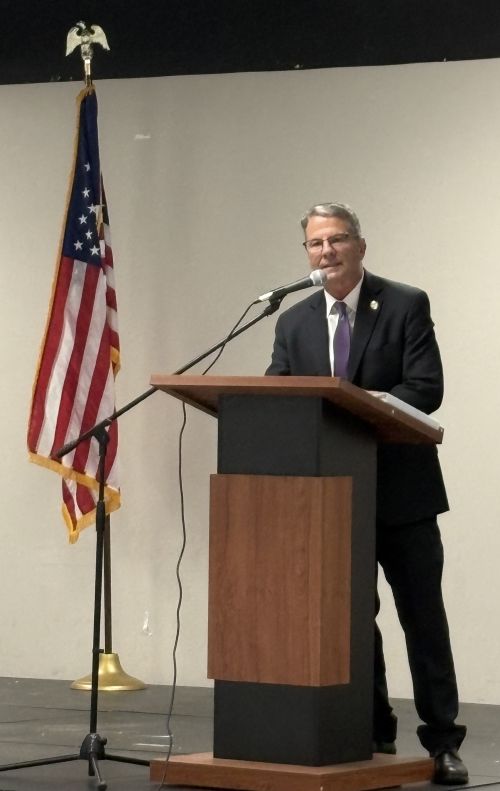
State Sen. Charles Perry discussed water security, electric grid reliability, data center development, and property tax policy during a town hall meeting in Brady, outlining priorities he expects will dominate the upcoming Texas legislative session.
Addressing local residents, business leaders and elected officials, Perry said Texas lawmakers will likely focus on three major issues when they return to Austin: data center regulation, electric generation and transmission capacity, and property tax reform.
Perry’s remarks focused on the rapid growth of data centers across Texas. He said the Legislature is expected to consider guardrail legislation to address concerns about power generation, water use, and infrastructure impacts. According to Perry, many developers entering Texas are already following guidelines that future legislation is expected to incorporate.
Perry challenged concerns that data centers will place an excessive burden on local water supplies or increase electricity costs for consumers. He pointed to several projects within his district where companies have invested in community infrastructure, including water systems, wells, roads, and utility improvements. He also noted that current state and federal policies require safeguards to prevent data center energy demands from being shifted onto residential ratepayers.
The senator defended county and local officials who have faced criticism over data center projects, explaining that many developments begin with private land transactions that occur before local governments know about the project.
“County officials, city officials and state officials could not have known” about many of the projects before property sales were finalized, Perry said.
Perry also addressed concerns about Texas’ electric grid and future transmission projects. He discussed the proposed 765-kilovolt transmission lines and said lawmakers need a clearer understanding of how those lines would support reliable power generation before moving forward. He emphasized that discussions involving data centers, power generation and water resources are closely connected and should be evaluated together.
While acknowledging Texans’ desire for property tax relief, Perry cautioned against proposals that would further centralize financial control in Austin or limit local governments’ ability to fund infrastructure projects. He argued that long-term investments in roads, water systems, schools and public services remain essential to the state’s future growth and stability.
Water infrastructure emerged as the central focus of much of Perry’s presentation. He highlighted ongoing efforts involving brackish groundwater development, desalination projects, and the potential beneficial use of treated produced water from oil and gas operations. Perry said Texas has significant undeveloped water resources and that the main obstacle to securing future supplies is funding the infrastructure needed to develop them.
“If you took a shower this morning, someone 30 years ago guaranteed that water was going to be in that shower,” Perry said while emphasizing the importance of long-term planning and investment.
During a question-and-answer session, attendees raised issues related to rural health care, state leadership, municipal utilities and economic development. Perry said affordability remains a major challenge in health care and pointed to continued support for federally qualified health centers serving rural communities.
Throughout the discussion, Perry returned to a consistent theme: Texas must continue investing in critical infrastructure if it expects to support future growth while preserving the quality of life residents expect.
“I’m committed to making sure my grandkids can stay in Texas and have water,” Perry said.